"4000 man-years"
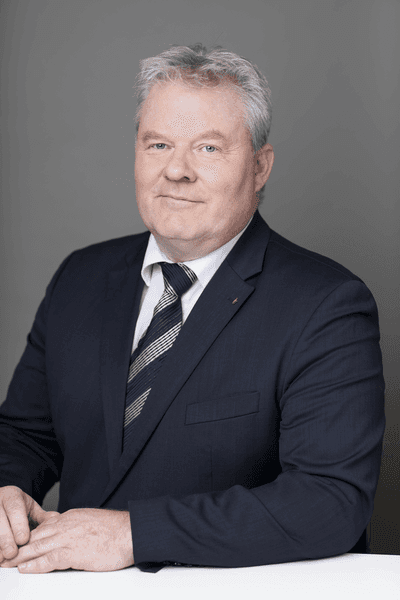
Sigurður Ingi Jóhannsson, Minister for Transport and Local Government and Chairman of Framsókn, presented a bill for new legislation on cooperative road construction projects in Parliament yesterday.
“This bill, which is one of my priority issues, has been under preparation in the ministry for the last two years and aims to increase the necessary funding for road construction.”
„The pressure on the country's roads has increased significantly in recent years, among other things due to the increase in the number of tourists. While we wait for tourists to return, it is therefore wise to make good use of the time for preparation of construction, as various people have pointed out in recent days and weeks. The goal of the bill is, therefore, to significantly increase funding for road construction and to meet the great need for investment in transport. It is planned that the cooperative projects in road construction introduced here could create up to 4,000 man-years, divided between design in high-tech jobs and contracting during the implementation period, in addition to the jobs that arise from such activity. Therefore, this bill is an extremely important tool in order to strengthen domestic activities in the coming months and years, strengthen the economy, and increase jobs.”
With this bill, an investment opportunity is presented, for example for pension funds, investment for the long term, 15–30 years.
So let's use the time wisely and keep going “The government has placed great emphasis on infrastructure development throughout its operation, not least in transport matters. As a reminder, I have twice presented a transport plan in the past two years. In the one currently being discussed by Parliament, there is a significant increase in funds. Funding for road construction will increase by 4 billion a year for the next five years. Construction projects of 214 billion will be accelerated within the 15-year period. Funding for maintenance and services will increase by 1 billion annually over the next 15 years. There is also an agreement on direct government financing in the transport agreement with the municipalities in the capital area, which is on the agenda later today, totaling 45 billion, projects amounting to 120 billion in total. In the transport plan currently before Parliament, Iceland's first aviation policy and the first comprehensive policy on public transport between settlements can also be found. Great emphasis is placed on transport matters.
Outside of the transport plan, there is then fast-track financing and cooperative projects regarding road construction which is under discussion here. With the accelerator projects that this bill is intended to hasten, project funds will be freed up that can be allocated to projects that would otherwise have needed to wait longer than planned.”
Travellers should have the choice of an alternative route
„The main conditions for the decision on cooperative projects in road construction are that travelers should have the option of an alternative route where a toll is not required. In the cooperative projects discussed here, the key point is that the distance should be shortened and thus the benefit to the traveler is substantial. It is assumed that tolls will mostly cover the costs and operation. In addition to this, it can be argued that cooperative projects have maximum profit when looking at the societal benefits of transport improvement, as the choice of projects is often dependent on the demand for the service. Thus, society gets more for its money when cooperative projects are involved.”
Various reasons exist for increasingly involving private companies in the development of transport systems:
cooperative projects can be a way to maintain investment in difficult times.
cooperative projects are a way to utilise the advantages of private initiative in transportation, specifically in terms of innovation and flexibility in the construction and maintenance of the road system.
cooperative projects can help ensure that taxpayers get more value for their money, the service improves, and the risk-sharing between the public and private sectors is favorable.
„Cooperative projects involve that payments for the project may consist of tolls, shadow tolls, or fixed payments from the state treasury to the contractor. It is not uncommon for a private entity to take on some financial risk, whether from the financing itself and/or from the risk that traffic volume is below forecast. There is uncertainty as to whether traffic forecasts will hold up.
It is often considered that market participants have the knowledge and experience that is useful for managing risk in projects. Nevertheless, it can be expected that the contractor's bid to collaborate with the state on projects will increase in line with the risk he takes in the collaboration, but varies depending on the participants and projects. At the end of the contract period, the state takes over the operation of the structures at no cost. We know such projects. This describes the Hvalfjörður Tunnel model.
The projects proposed to be carried out as cooperative projects in this bill are as follows: Ring Road northeast of Selfoss and bridge over the Ölfusá river, the ring road across Hornafjörður river and a new bridge there, Axarvegur, doubling of Hvalfjörður Tunnel, the ring road around Mýrdal and tunnel through Reynisfjall, and then Sundabraut. In all cases, travelers have the option of an alternative route and all the works result in increased traffic safety.
The bill contains information on each project along with information that influences the calculation of tolls, such as cost estimates where they are available and information on road shortening.
The main purpose of the bill is to permit the financing of cooperative projects partly or wholly with toll charges from traffic on the road constructions. However, toll collection must not start until the projects are completed and never last longer than 30 years.
Tolls can wholly or partially cover building or construction costs, maintenance, operation, development, or a reasonable return on road investment. The bill grants authorization to negotiate that ownership of the structures may be with the private entity during the contract period, but at the end of the contract period, the structures shall be considered state property without special compensation.”
„Under current conditions, the bill addresses an urgent need for development for future periods, new pressure on roads with increasing tourist flow. It addresses the urgent need for job creation. It responds to the opportunity for more profitable investment options for long-term investments, for example, the pension funds,” said Sigurður Ingi.