Access to education affects freedom of residence.
School operations have influenced the development of societies for centuries and will continue to do so for years to come, as reflected in the education policy up to 2030, which states "Education is the key to future opportunities and one of the main driving forces of societies and the prosperity of humankind." Thus, it can be concluded that the competitiveness of nations is based on education, and the same applies to the competitiveness of regions.
Recently, I attended a seminar on education at the Arctic Circle Assembly. It was highlighted that there is a difference in the development of societies with and without universities and that different methods need to be applied in university activities in rural areas compared to cities to achieve societal impact.
Distance Learning
The offer of distance learning in Iceland has steadily increased over the past decades, and I have observed how the number of educated teachers, social workers, nursing assistants, and nurses has grown in my immediate environment, seen many start to obtain secondary school credits through distance learning, and move on to the university level. I have also had conversations with many who have not been able to pursue the education they are most interested in, due to residence, career, or family circumstances. People who have seen where the challenges lie and want to gain the necessary knowledge for the community where they live, such as a master's in psychology, speech therapy, or social work. I've also talked to people who have not been allowed to take field training in regional areas, even though they precisely want to be prepared for work there, for example, in health care, computer science, and sports science.
It is not always easy to access information about the offer of distance learning, and for a long time, the answer was, "you can either go into nursing and teaching, but you can also try to sign up for something else and see what the teachers say". This has fortunately changed somewhat, but my disappointment lies in how slow the changes in the offering of distance and flexible learning have been.
Significant Difference in Distance Learning Offering Between Universities
In a response from the Minister of Higher Education, Industry, and Innovation to a question from Lilja Rannveig Sigurgeirsdóttir in March 2023, it is noted that there is a significant difference in the proportion of courses available as distance learning across universities. The highest proportion is at the University of Akureyri and Bifröst University at 100%, and the lowest at 0% at the Iceland Academy of the Arts. It is particularly notable that at the University of Iceland, only 15.9% of courses are available in distance learning, resulting in 75% of courses at universities in Iceland being only available as on-campus learning.
For more than 100 years, as a society, we have emphasised equal opportunities for learning, as reflected in the education policy up to 2030, which among other things, emphasises equal opportunities for all and outstanding education throughout life. In this light, it cannot be considered acceptable that only 25% of courses at Icelandic universities are available in distance learning, neither for the individual nor for society.
The offer of distance learning from Icelandic universities needs to be significantly increased. Additionally, there is a need to improve the framework and information provision on what can be accessed through distance learning.
On Thursday, 2 November, the Regional Conference 2023 will take place in Reykjanesbær, and the conference will be streamed live. The theme this time is Residential Freedom and among the topics of discussion will be the interplay between university education and residential freedom, and I encourage everyone to tune in.
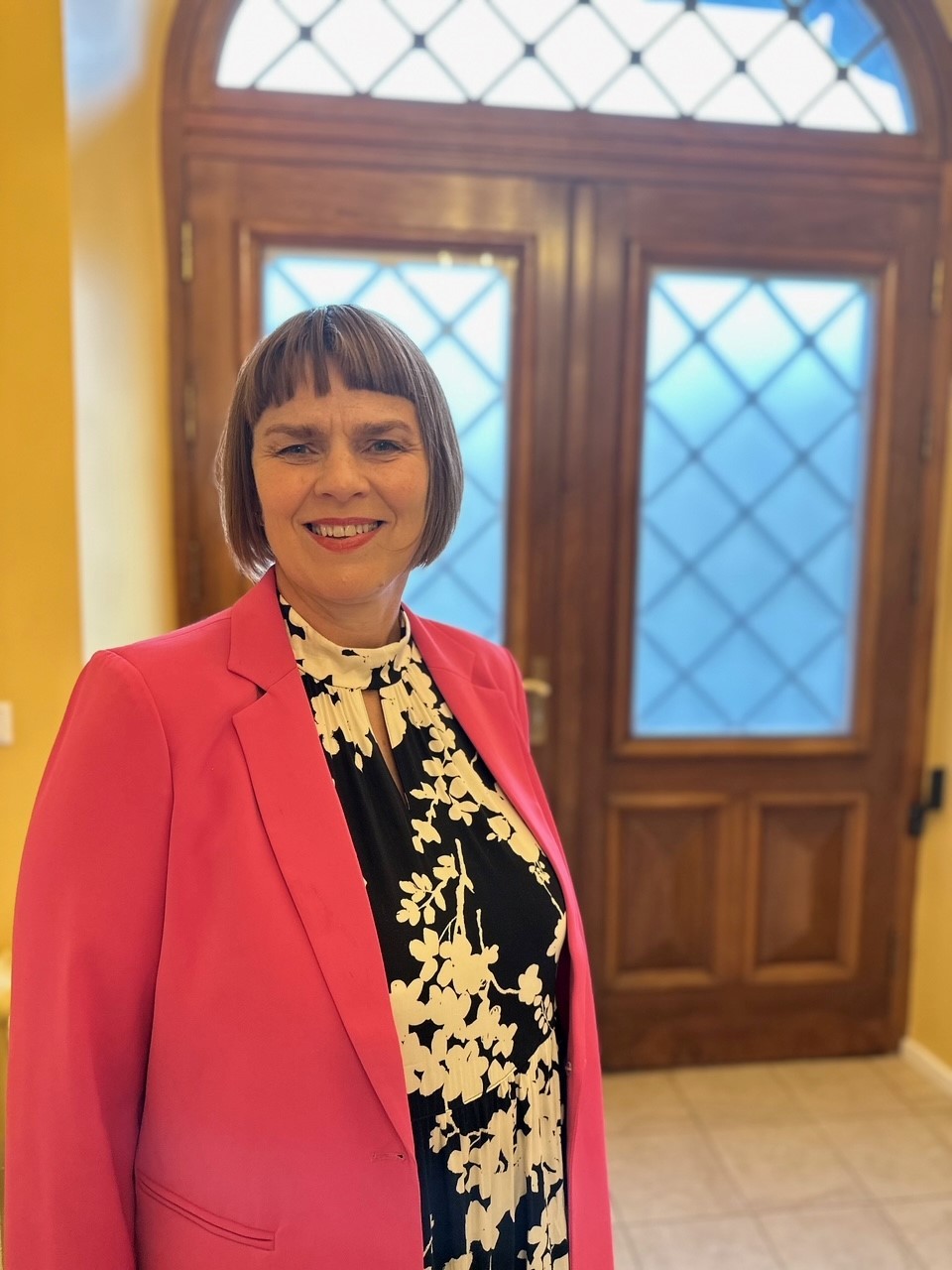
Líneik Anna Sævarsdóttir, Member of Parliament for Framsókn in the Northeast Constituency.
The article was first published on visir.is on 1 November 2023.