ADHD can be a strength
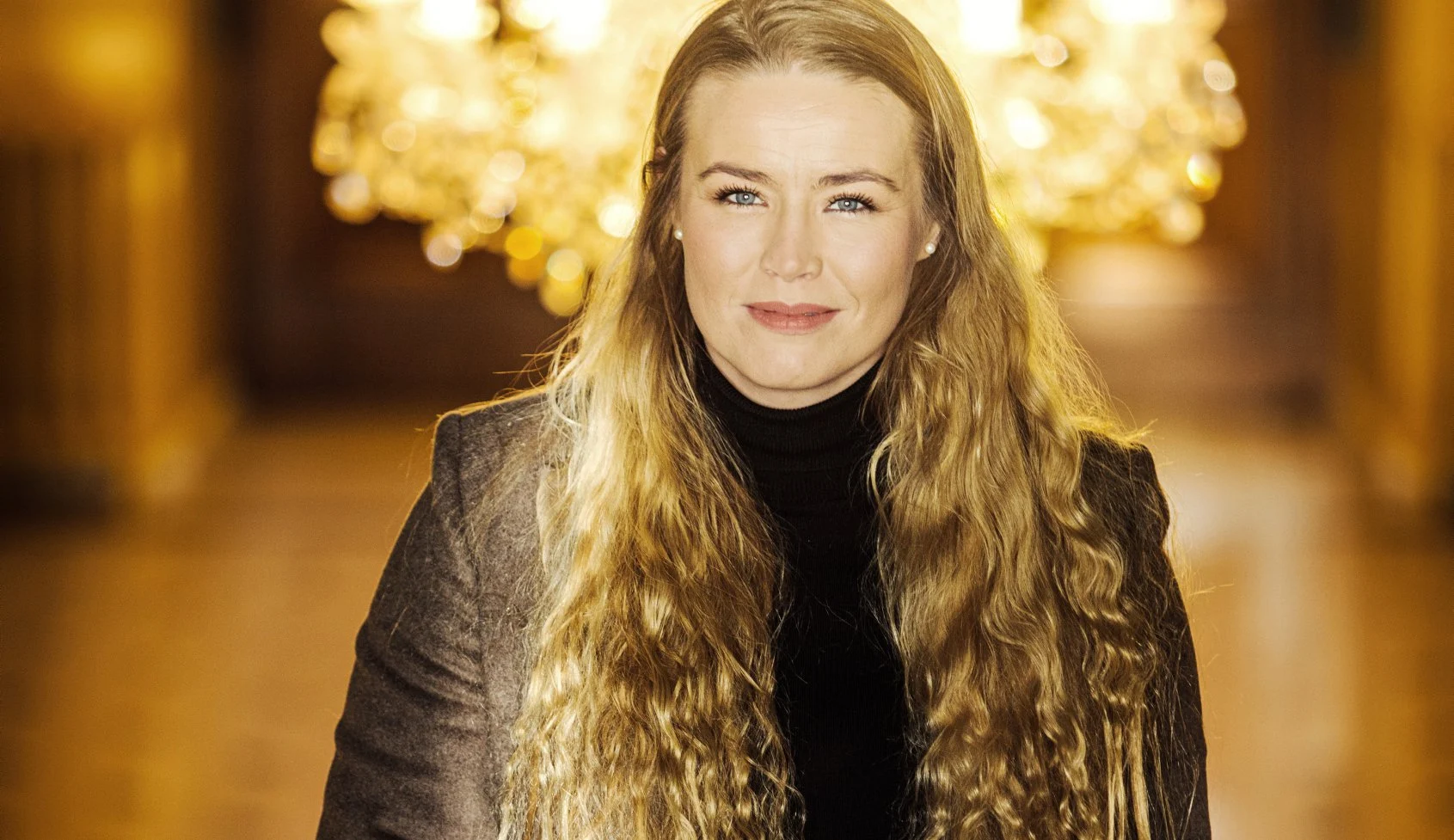
The MP Hafdís Hrönn Hafsteinsdóttir is one of many Icelanders who have been diagnosed with ADHD. She says it is important not to talk down to those who struggle with ADHD.
“When people hear me talk about having ADHD, they always say that it doesn’t show. If you know me well, you can see it,” says Hafdís Hrönn Hafsteinsdóttir, an MP for the Progressive Party, in a light-hearted conversation with Fréttablaðið about ADHD.
She spoke at a special ADHD conference that was held recently. Attention deficit and hyperactivity, often referred to as ADHD in everyday speech, is a neurodevelopmental disorder that can have widespread effects on daily life.
“One has learned how to utilise this for good and when one should recognize their own limits. One learns how to manage these strengths to serve oneself,” says Hafdís, adding that this is a long-term project.
“This is a marathon. I still tend to break myself down for not being good enough at time management.”
Moved abroad with a day's notice
Hafdís, who received her diagnosis just after turning twenty, was born in Ísafjörður but moved young to Reykjavík.
“I received the diagnosis at 21. Until then, I had struggled to settle things and was a bit scatterbrained. The clearest example of this is when I decided to move to Norway with 24 hours' notice. My mum lived there, and I got the idea that it would be incredibly clever to try living abroad. I packed my bags and moved the next day,” says Hafdís, adding that it was a very correct decision at that moment when she looks in the rear-view mirror today.
“I don’t regret that decision. It’s often that one thinks back: I could have thought this through better, but this is not one of those.”
Hafdís admits that ADHD has placed hurdles in her educational journey.
“This had a significant impact on my schooling. There were times when it was challenging to stay focused on the subject, but at the same time, one was good at other things. Language skills are something I quickly adapted to, but tasks that required endurance were more difficult.”
From law to parliament
After receiving her diagnosis, Hafdís managed better in her studies and obtained a master's degree in law a few years later.
“I immediately started on medication, which naturally took some time to adjust, and I noticed a significant difference. I tried to pursue education simultaneously on how to work with this and gain better control, and I managed to combine this,” she says, recalling that during her university studies, she stopped taking medication when she became pregnant and did not miss a beat.
“This was a huge rush, and additionally, I had a child in my second year of law school. When I look back, I don’t understand how it all managed to come together. When I was pregnant, I felt I didn’t need the medication because my body was producing the hormones the brain lacked, and my studying went better than ever before. The body showed what it is capable of.”
The conversation shifts to Hafdís's work. Parliamentary meetings can be time-consuming, but she says she is aware of ways to cope with that.
“There are still things there, impulsiveness, and I can be beside myself. I can find it difficult to sit still in long meetings, but one learns along the way and remembers to stand up and move. It works better for me to concentrate when I am in motion. In long meetings, one tends to fiddle with something,” she says with a smile.
“When one is in a job that requires concentration, the brain can have certain limits. It is often said to work for 50 minutes and take ten minutes' break. Then you create conditions where productivity is at its peak.”
Hafdís, here in the middle of the last row, was elected to parliament for the first time last year. Fréttablaðið/valli
It’s not right to call this a weakness
At the conference, results were presented discussing how young girls tend to be diagnosed with anxiety rather than ADHD. Boys are diagnosed much more often, but the ratio should be equal.
“I have always felt a certain social anxiety. There is a fear of missing out on something or letting someone down. In my case, time management is extremely anxiety-inducing, but at the same time, this can be a superpower if you manage to harness it and use it in life as your main asset. Then you have something in your hands that can enrich society. Many of the world's leading entrepreneurs have ADHD. It requires forward-thinking to come up with innovation,” says Hafdís and continues:
“The discussion in society is still such that people want to talk little about this and think this may even be a weakness, which it absolutely is not. There are few individuals as resourceful and fertile in thought as those who are dealing with these challenges daily. Therefore, other pathways must be sought to make things work and to view matters from another perspective. That’s why it is so important not to see this from a negative standpoint and to remove the prejudices from this. It is a common joke to say: do you have ADHD? And laugh. I have done this myself, but it is also often great to respond affirmatively when the question arises.”
Issues that hit close to home
At the conference, there was talk of the hidden cost of having many in society who have yet to receive a diagnosis. It is estimated that about 30,000-60,000 individuals have ADHD in Iceland and that it is difficult to manage to accommodate everyone.
Hafdís, who has participated in politics in various ways for years, took a seat in parliament for the first time last year. There, she has a certain basis for working in relation to the issue that has increased its importance for her.
“This issue is close to my heart. I call it a superpower and say that if you direct it in the right way and learn to recognize yourself, then you have something in your hands that no one can pin down what can be done with,” she says, talking about the importance of approaching the issue correctly in cases concerning children.
“There is always talk about meeting our children where their strengths and interests lie to try to make the most of their strengths. There is a cost associated with this, but it will pay off many times over when they have been provided with assistance and become stronger individuals,” the MP says when asked about government actions in these matters.
“Banned to damage, the book by Gunnar Helgason, which takes stories of ADHD and puts them into a children’s book. It is crucially important for kids dealing with ADHD to reflect on these experiences. It is very important for the children to hear positive stories.”
At the conference, it was discussed that 75 percent of prisoners have ADHD.
“Many men at Litla Hraun who have been diagnosed with ADHD have described that when they were little, they were often just labeled as naughty. There is something that needs to be fixed in how we talk to our boys. If we are constantly accusing them of being naughty, they end up believing they are indeed useless because they cannot sit still,” says Hafdís and continues:
“There are many stories from former prisoners who were broken down as children because they could not find their footing. There are individuals who find themselves in situations they cannot handle and go off track because impulsiveness can easily lead people there.”
The interview was published on the website: frettabladid.is on 5 November 2022.