
Action plan for food security and protection of livestock species
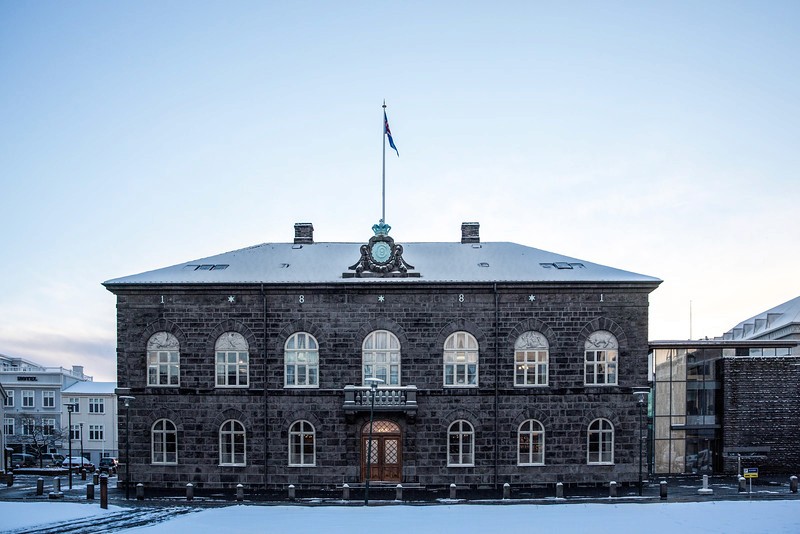
The Agricultural Committee of the Althing has presented to the Althing "Action Plan on Food Security and the Protection of Livestock". The proposal states that with the approval of the Althing of the resolution, the government is tasked with implementing 17 measures aimed at enhancing food security, ensuring the protection of livestock, and improving the competitive position of domestic food production. The parliamentary resolution proposal is submitted in connection with a bill on amendments to laws on animal diseases and defenses against them and laws on food and laws on the inspection of feed, fertilizer, and seed products. Among the measures in the action plan is to implement additional guarantees regarding imported turkey meat, chicken meat, and eggs, and to request additional guarantees regarding imported pork and beef. The distribution of poultry meat will also be prohibited unless it can be proven that no Campylobacter has been detected.
The EFTA Surveillance Authority (ESA) permitted Iceland at the beginning of the year to apply additional guarantees, which involves the producer or sender of the product to the country taking samples from each shipment of chicken and turkey meat and from eggs that will be tested for salmonella.
It will be permissible to demand that certificates of sampling and examination accompany each shipment of the aforementioned products.
A similar system of additional guarantees is also in place for pork and beef, but Norway, Finland, and Sweden have already received such additional guarantees. If such additional guarantees cannot be obtained, it is directed to the minister to take measures that prevent the distribution of salmonella contaminated meat on the market to protect public health – taking international obligations into account.
It shall be established in law that it is prohibited to distribute untreated poultry slaughter products on the market unless it can be demonstrated that the meat is from flocks that are not infected with Campylobacter.
The action plan stipulates that a risk assessment committee will be established, and its role will be to provide and oversee the implementation of scientific risk assessments in the fields of food, feed, fertilizer, and seed products, and is intended to promote improved risk management and be advisory in relation to the policies of authorities in the aforementioned areas. The appointment of the risk assessment committee will be completed by 1 July 2019. The latter half of the year will be utilized to organize the work of the committee, estimate costs, and ensure necessary funding from 2020 onwards. Efforts will be made to reduce the spread of antibiotic-resistant bacteria in Iceland and to ensure a faster implementation of EU regulations when it is necessary to stop the import of specific products with short notice. Regulation (EC) No. 206/2009 on the import of animal products for private consumption will be implemented. It will set clear provisions regarding which products and goods passengers may bring with them across borders and in what quantities, as well as stricter rules on the import of meat and dairy products by passengers from non-EEA countries, and they will generally be prohibited from bringing these products into the country. Iceland intends to be at the forefront of efforts to reduce the spread of antibiotic resistance. Within the framework of international obligations and on the basis of public health considerations, Icelandic authorities will aim to prevent the distribution of food items that are found to contain antibiotic-resistant bacteria. This is intended to be achieved, among other means, through:
a ban on the distribution of certain antibiotic-resistant bacteria in food following analysis of the situation,
the establishment of monitoring and in accordance with public policy in actions against the spread of antibiotic-resistant bacteria.
It is important to summon the leading experts in order to design measures aimed at minimizing the risk posed by antibiotic-resistant bacteria in food. The Minister of Fisheries and Agriculture shall submit a report to the Althing on the progress of this policy by 1 March 2020. Various alternatives to the aforementioned policy shall be discussed, and a timeline for the action plan on the next steps shall be presented, including when a ban will be enacted on the distribution of food that contains certain antibiotic-resistant bacteria. By 1 October 2020, rules will be established, based on the aforementioned work, on how these objectives will be best achieved. Sampling in the market must be increased and infrastructure must be strengthened to better provide services, scientific research, consultation, and monitoring in relation to antibiotic resistance. Consequently, an antibiotic resistance fund must be established as soon as possible which has the role of financing increased research.
Build the knowledge needed to demonstrate the uniqueness of Icelandic production concerning antibiotic resistance.
Rapid and inexpensive methods must be developed to detect antibiotic resistance in food, as that is a prerequisite for minimizing the risk posed by antibiotic-resistant bacteria in food.
Within the framework of the Nordic Council of Ministers, cooperation is underway in the fight against antibiotic resistance.
Public authorities will be ensured the authority to impose administrative fines on food companies that violate the ban on distributing poultry meat without proof that no Campylobacter has been detected. Thus, emphasis will be placed on the responsibility of food companies to ensure that food on the market is safe. There will be increased education for tourists regarding the import of products from the animal kingdom. It is believed that there is a risk that pathogens may be brought into the country through food and clothing of travelers. This risk is already present, and it is therefore important that travelers coming into the country are informed about the good disease status of Icelandic livestock and how vulnerable they are to new infections. Funding will be allocated to an initiative, and it is thus vital for those arriving here, both Icelanders and foreign tourists, to be warned about what to avoid concerning food and clothing as is well known in countries that have similar focuses in this regard. To promote innovation and development in domestic food production, it is proposed to establish a fund combining the Agricultural Production Fund and the AVS Research Fund in Fisheries. It is believed that by merging the funds, the innovation and development environment of the industries can be strengthened and enhanced. To achieve this goal, increased funding will be allocated to such a fund. It will be ensured that the proportional distribution of funding to these industries will be similar to what it is now. A public procurement policy for food will be implemented, as the government has accepted the proposal of the Minister of Fisheries and Agriculture regarding a food procurement policy for state entities. The goal of the policy is to ensure consumers food from wholesome products considering production methods and environmental impacts. The procurement policy will take into account that public procurement of food promotes reduction of carbon footprints in production and transportation. The policy will subsequently be referred to the ministerial committee on food policy, which will have the role of implementing the policy. A food policy for Iceland will be formulated, and a project team has already begun its work. The purpose of the policy is to highlight the priorities of the government that Iceland should become a leader in the production of wholesome agricultural products, alongside shaping a vision for the future, goals, and proposals for an action plan to implement within Icelandic industry and governance. It is important to reach out to and mobilize stakeholders and organizations in as many areas as possible in the work ahead, and a prerequisite for this is that those ministers who handle governmental matters related to the project actively participate in shaping the food policy for Iceland. Therefore, a special ministerial committee has been appointed to discuss Iceland's food policy under the leadership of the Prime Minister. An initiative will be launched regarding better labeling of food. The parties to the agreement are the Ministers of Fisheries and Agriculture, the Farmers' Association of Iceland, the Consumers' Association, the Federation of Trade and Services, the Federation of Employers, and the Federation of Industry. The goal of the initiative is to ensure consumer rights for information on origin, production methods, use of medicines, and environmental impacts of food. The development of customs protection will be explored and the position of Icelandic agriculture will be analyzed in relation to changes in the international trade environment. Consideration will be given to establishing a special insurance fund for losses that producers may incur due to livestock diseases, taking into account neighboring countries and possible solutions within the European Union and those solutions that are already available for farmers who suffer losses due to livestock diseases. An initiative will be undertaken regarding increased monitoring following the removal of the licensing system. Four months after, a stance will be taken on how the progress of the monitoring has been. If significant deficiencies in monitoring are revealed, it is important that the structure of it be re-evaluated from the ground up. Emphasis will be placed on sampling and reviewing certificates regarding salmonella and Campylobacter, with an increase in the frequency of spot checks. In this way, the reliability of the aforementioned factors will be strengthened. The Food and Veterinary Authority will be tasked with developing guidance for importers about the certificates and documentation that must be in place for food imports. A report on the progress of the plan will be submitted to the Althing by 1 November 2019 and will be presented to the Agricultural Committee.
(Photograph: Rakel Guðmundsdóttir)