The application is not a waiting room for adulthood.
Children are generally not old when they realise that it is better to be big than small, older than younger. Size and age come with power and the opportunity to influence one’s own life and society. Discourse reflects dominant attitudes towards social groups, and children are no exception to this. Adults' undeniable behaviour is sometimes called childish. It is evident that to have weight in society, as it is constructed today, it matters to be an adult.
It is often argued, on various occasions, that children are the future. There is undoubtedly a beautiful thought behind this, and the intention is to highlight the importance of taking good care of the world in order to hand it over to the children when they grow up. What many do not realise, however, is that with these words, we are saying that the time for children will come later. Childhood, however, is not a waiting room for adulthood. Children and young people should have a voice from the moment they are capable of expressing their opinions, and their voice should have space and weight.
The Children's Convention: A Promise to Children
Over thirty years ago, the children of the world were given a promise. A promise to protect their rights and welfare above all else. The promise, commonly referred to as the United Nations Convention on the Rights of the Child, marked a significant turning point in the struggle for children's rights, as the convention includes international acknowledgment that children are independent individuals with full rights, irrespective of the rights of adults.
The convention was ratified by the Parliament in 1992 and enacted in 2013. Despite a long time having passed, many of its provisions have still not become a reality. It is still considered exemplary and noteworthy when children are given the opportunity to express themselves in public discourse. This should, however, be completely self-evident, as when all is said and done, there are few issues that do not somehow affect their lives.
Children's Voices Gain Increased Weight
A comprehensive review is currently underway regarding all services for children in Iceland at my initiative. We are at a crossroads and have all the capacity to create perhaps the most progressive framework in the world when it comes to listening to children's voices and fulfilling their rights. There is an increasing understanding that children's voices and the Convention on the Rights of the Child should be the compass that guides all decisions and policies concerning the younger generation's lives. To confirm this, it can be noted that the government approved my proposal earlier this year that all significant decisions as well as legislative proposals regarding children should be reviewed based on their impacts on their status and rights.
This thought underpins all of my work in the office of the Minister of Social Affairs and Children. Not least in the aforementioned review and integration of services for children that is now taking place under the leadership of the Ministry of Social Affairs across other ministries. The thought is also reflected in the ministry's support for the recently held Children's Parliament of the Children's Ombudsman and the newly signed cooperation agreement of the Ministry of Social Affairs with UNICEF regarding purposeful cooperation in the implementation of municipalities on the Convention on the Rights of the Child. This will proceed under the banner of Child-Friendly Municipalities, with the aim that at least 30 percent of municipalities in Iceland will have received recognition as child-friendly municipalities by the end of 2021.
A Part of Daily Life
To ensure a truly child-friendly society, children must enjoy the rights laid out in the Convention on the Rights of the Child in their immediate environment every day. Therefore, its implementation, above all, must take place among municipalities, as this is where children mostly seek the services they need. Implementing the Convention means that its principles run like a red thread through the municipality's activities at all levels. The Convention on the Rights of the Child should thus no longer be a beautiful crown placed on festive days but rather a part of daily life, every day and everywhere.
I emphasise that this is not just about beautiful words and fine promises. Behind these changes lie hard facts, as more and more research shows that children's welfare is crucial when it comes to building a healthy and good society for both the short and long term. It takes time to create, and one of the best investments that societies can undertake is to take good care of children.
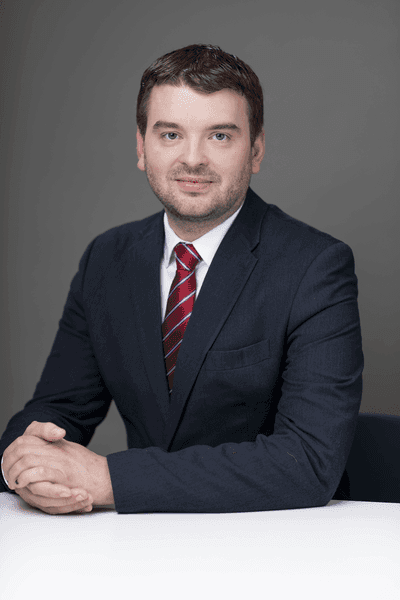
Ásmundur Einar Daðason, Minister of Social Affairs and Children. The article was first published in Morgunblaðið on 12 December 2019.