
Agriculture
Samþykkt á 37. Flokksþingi
Agriculture
The situation of Icelandic farmers has been difficult for a long time. A significant increase in imported agricultural products, high capital costs, and substantial increases in input prices have been challenging the industry in recent years. Action must be taken to address the serious situation that has arisen in agriculture in this country to ensure domestic food production and the nation's food security. It is necessary to secure farmers, especially young farmers, with adequate working conditions and income for their contributions so that they can continue their work and prevent dropout in the industry with negative effects on the supply of agricultural products.
The government should seek ways to increase efficiency in domestic food production and its competitiveness against the ever-increasing import of food. For instance, positive changes in agricultural legislation could allow meat processing plants to cooperate or merge, providing necessary efficiency and improved competitiveness against food imports.
Due to the importance of agriculture for food security and the role it plays in climate and environmental issues, it is essential that the administration concerning agriculture, land use, and food is under one ministry.
Diverse agriculture, innovation and product development
Framsókn wants to support and strengthen Icelandic agriculture to become sustainable in terms of diverse food production and maintain the country's characteristics of thriving rural areas and vibrant countryside. Agriculture and the exploitation of the country's resources are part of our history and culture and an attraction for domestic and foreign tourists. The support should aim to increase value creation, promote the production of wholesome foods in line with demand, and ensure that farmers earn a livelihood from their farming. It is important that domestic food production meets the needs of the nation. Framsókn therefore suggests that a special incentive be set up for producers aiming to produce food products that are in short supply in the country. There are significant opportunities in further production of lamb, pork, horse and beef, chicken, grains, vegetables, and other crops.
Innovation and product development in agriculture
Innovation in agriculture needs to be encouraged and ensured that regulations do not hinder it. Innovation in agriculture should promote more diverse production and increased processing and utilization of food. At the same time, attention must be paid to the use of products not suitable for human consumption, both to increase the value of farmer's products and due to sustainability and environmental considerations. It is important to look at the development that has taken place in the processing of marine products in this country in recent years, which has increased the profitability of the industry.
Greenhouse cultivation
Framsókn wants to ensure sufficient electricity supply and fair electricity pricing for horticultural farmers. This enhances primary production, increases productivity, encourages further investment, innovation, and development of the sector. All opportunities exist to significantly increase the production of domestic vegetables and herbs. Incentives must be created to grow more varieties of vegetables, fruits, plants, and flowers that can be cultivated in this country.
Crop farming
Framsókn aims to increase incentives for crop farming and experiment with growing more types than before. With increased grain cultivation, farming becomes more sustainable, particularly dairy production. The working environment for crop farming needs improvement to make it a more attractive option for farmers. Consideration needs to be given to insurance coverage against crop failure. Also, access to grain drying facilities and harvest equipment and the ability to protect against the intrusion of geese and swans.
Working conditions for farmers, new entrants and agricultural support systems
The situation of farmers has deteriorated in recent years, and new entry has been minimal. Increased costs due to rising interest rates have heavily affected farmers. Simultaneously, farmers have been subject to strict regulations regarding animal welfare. Such regulations are necessary but have incurred substantial investments in recent years. Additionally, imports of agricultural products have grown significantly, leading to loss and challenges for domestic agriculture. Agricultural tariffs need to be reconsidered, including adjusting the fixed rate tariff which has not developed in line with general price changes since its implementation. It is urgently necessary to support Icelandic farmers to address the difficult situation.
Framsókn emphasizes improving the working environment for farmers. In times where plentiful employment is available, fewer people choose agriculture as a main profession. There is a need to improve the substitute system for farmers, alongside ensuring young farmers have improved leave opportunities, such as parental leave, as part of fostering further entry of young people into the sector. With increased technology and developments in agriculture, many farming tasks' workloads can be reduced. Less workload and improved working conditions decrease the risk of accidents and enhance safety and wellbeing. Additionally, to improve living conditions and safety, it is crucial to ensure three-phase electricity, stable phone connection, and fiber optic cable throughout the country.
Framsókn emphasizes that the nation's food security is ensured through agreements between the government and farmers. It is a fundamental requirement for any society to provide its residents with adequate healthy food at affordable prices. It is necessary to ensure competitive operating conditions for Icelandic agriculture by reorganizing the regulatory framework, inspection, and management in such a way that the organization promotes innovation. Flexibility must be present to adapt to changes and increase the value creation of the industry in harmony with the environment and society to ensure the nation's food security for the future.
Tax incentives and financing
Framsókn wants to encourage new entry and make it easier for newcomers to take their first steps in agriculture. This way, we promote more positive development across the country. It is important to find ways to continue occupancy on farms and create incentives for landowners to sell agricultural land for continued agricultural use.
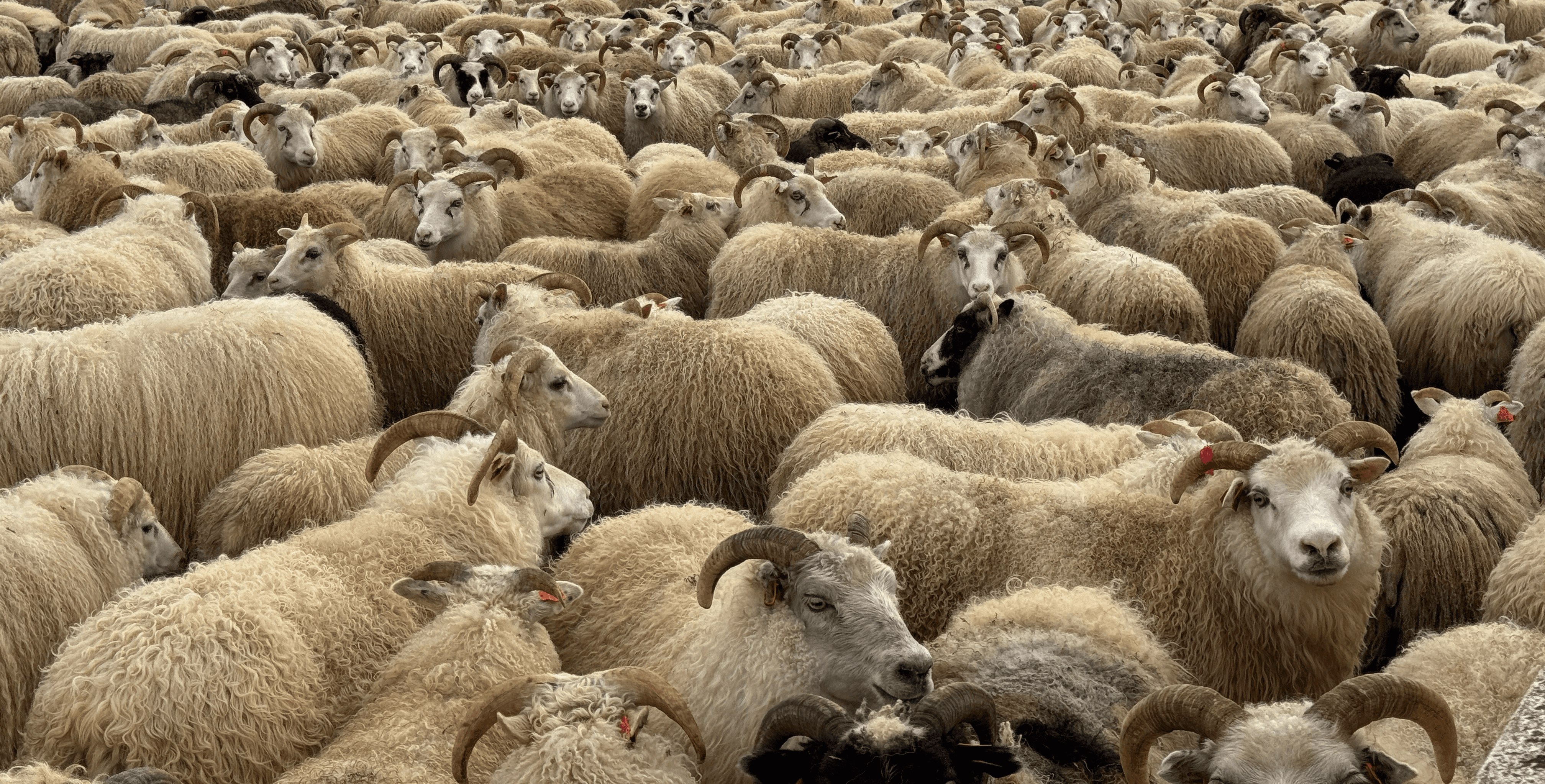
To promote new entrants to sheep farming, it is proposed that changes be made to tax laws to improve the position of sellers and buyers of farms. One can look at tax legislation in Norway and EEA countries that have taken a similar approach. For instance, tax incentives for the sale of farms for continued agriculture. Alongside this, one could mention agricultural tax allowances, tax-free grants, and tax exemptions for the sale of farms or agricultural enterprises for continued agriculture. The sale of farms and enterprises (often limited companies) should not fall into the same category as the sale of general assets and businesses, such sales are of a different nature and circumstances vastly different.
Framsókn considers it necessary to make changes to loan financing for land purchases and agricultural operations, including ensuring access to patient capital on fair terms. This can, among other things, be done by providing farmers with loans through the Regional Development Institute at low interest rates for the long term, in the spirit of the old founding loan department. To make this possible, funding to the Regional Development Institute must be significantly increased. It is then proposed to implement shared loans for farmers so that the government contributes 25-30% of the purchase price of land, which would be repaid at the end of the loan term, or if a sale occurs.
The agricultural support system needs to be reviewed with the aim that farmers who practice agriculture as a career receive proportionately more support. If those with larger sheep farms received a bigger share of government payments, they could more feasibly make farming a full-time occupation. It is important to maintain the payment limit as has been approved with all votes cast at industry association meetings in recent years. RML reports on the performance of sheep farms have shown the importance of the payment limit and suggest that it must be maintained, at least until a better support method is found.
If looking at changes to the agricultural support system, one should consider three contractual pillars:
1) Support for food production intended for domestic production.
2) Support for rural areas with the condition that it goes to individuals and/or companies with permanent residence/operations in the area concerned year-round.
3) Support for climate-friendly projects in agriculture that promote carbon neutrality in the industry.
Moreover, an effective and reliable insurance system must be in place for farmers. The insurance coverage of farmers in the aftermath of natural disasters also needs to be examined. Damage caused by natural disasters is often considerable and can overwhelm both individuals and operators, thereby threatening entire communities. Insurance coverage against natural disasters is therefore important, as is efficient and fair processing of such claims after a disaster.
Domestic feed and fertilizer production
Framsókn wants to strengthen domestic feed and fertilizer production and exploit the opportunities that lie in geothermal energy and energy transition in agriculture. Through targeted measures, we can produce up to 80% of the concentrate feed needed for domestic food production. Organic waste must increasingly be used for manure for the benefit of the circular economy and climate goals.
Domestic food production is too dependent on imported inputs, such as raw materials for feed production, fertilizers, seeds, and oil, which can easily be disrupted if conflicts or natural disasters occur that limit imports. It is prudent to establish reserves that suffice for at least a year to ensure inputs for food production.
Land use, forestry, and land reclamation
Framsókn emphasizes that sustainable land use integrates food production, biological diversity, and work against climate change. The role of the government is to acquire knowledge useful for different land uses, provide advice and articulate leadership. Leadership is manifested, among other things, through planning that preserves good agricultural land and diverse incentives for sustainable land use and carbon sequestration, including land reclamation and forestry. Land use classification needs to be better defined. Additional funding for afforestation on farms must be secured so the state can honor agreements with forest farmers.
Framsókn emphasizes that work on carbon sequestration and measures to reduce carbon emissions from land should be in the hands of those who have employment in land use, on private land, commons, and national land.
A deliberate consideration is needed on where ecosystem restoration requires special intervention and where it is more suitable for nature to be left untouched for restoration.
Framsókn emphasizes that diverse land use requires mutual respect among neighbors but believes that shared fencing is often a necessary precondition for diverse land use to thrive. Continued state contributions to fencing and their maintenance through Land and Forest and the Road Administration must be ensured. More cooperation between them and with municipalities should be examined to ensure efficient use of funds.
Food
Wholesome food, food security and origin labelling
Framsókn emphasizes the importance of domestic food production for the nation's food security. Increased sustainability must be encouraged, and carbon emissions in food production reduced. At the same time, arrangements for emergency reserves of agricultural products that can be produced in this country must be implemented, with the aim of ensuring minimum reserves of agricultural products in the country at any given time.
The uniqueness of Icelandic food is exceptional on a global scale, as the use of drugs and pesticides in agriculture in Iceland is among the lowest in the world, and the use of growth hormones is banned. It is an important health issue to prevent the spread of antibiotic-resistant bacteria in Iceland with strict measures, as antibiotic resistance is a rapidly growing threat worldwide.
Framsókn wants to build the brand of Icelandic food, where the purity of the Icelandic nature and the uniqueness of Icelandic food, with an emphasis on traceability, wholesomeness, and quality, are highlighted. Marketing Icelandic food, increasing visibility, and positive discourse encourages consumers to make a conscious decision to choose Icelandic and thereby support domestic food production with their purchases, with related derivative effects.
Framsókn wants when public procurement for school canteens and other institutions, always to aim to choose Icelandic food. It is also important that schools educate children and teenagers about the importance of consuming Icelandic food from a health, sustainability, environmental, and economic standpoint in Iceland.
Framsókn wants to introduce certification for the origin of domestic food production for clear differentiation from imported products. Food coming from abroad should be labelled as such. It is important to counteract greenwashing, which can appear as false or misleading certification labels.
Food research, innovation and oversight
Regulations must not be so burdensome that they stifle innovation, product development, and the competitiveness of companies in food production. Framsókn wants to amend laws and regulations regarding oversight of agriculture and food production to increase efficiency and reduce costs. Supervision should be based on risk assessment in accordance with the scope and risk contained in particular production and distribution.
Framsókn wants to increase the importance of research in agriculture, emphasizing innovation and added value. Framsókn wants to especially support research and innovation in food production such as microalgae cultivation, single-cell protein cultivation, insect cultivation, and/or other new protein source production, as part of increasing the nation’s food and food security for the future.
Food straight from the farm
Framsókn wants to increase the ability of farmers and farms to create their uniqueness to increase product value and create by-products based on culinary culture and guest experiences. Regulations on home processing and retail sale of food need simplification so that farmers can produce and sell food directly from the farm. Farmers should be allowed home slaughter and processing following a risk assessment and necessary training.
Framsókn wants to support craft breweries and smaller domestic alcohol producers. However, with certain phased restrictions considering public health perspectives. A discount on alcohol duty for smaller domestic alcohol producers is intended to reduce their production costs and thus promote further innovation while making them more competitive in the market.
Food imports and trade protection
Framsókn considers it necessary to impose the same requirements for the wholesomeness and health of imported agricultural products as for domestic production to ensure the future competitiveness, health, and cleanliness of Icelandic agricultural products. It must be ensured that meat from animals raised under conditions inferior to those required domestically is not imported. Consumers have the right to know under what conditions and care food is produced, including the use of drugs, hormones, and the carbon footprint of products.
Framsókn wants to increase trade protection for the benefit of Icelandic agriculture and ensure that procedures and oversight in allocating trade quotas comply with the provisions of agreements on trade protection. Tariff schedule fees need to be updated, and trade quotas priced in line with their purpose. Opportunities that arise for exporting agricultural products must be utilized, for example, on the basis of trade agreements, geographical uniqueness, the purity of Iceland and Icelandic food. The trade agreement with the European Union should be reviewed to ensure a balance in the commitments of the contracting parties based on benefits. It is considered that the premises for the export of agricultural products have been broken. Framsókn believes it is imperative to significantly strengthen customs control to make it comparable to that which exists in comparison countries.
Animal welfare and prevention of scrapie
Framsókn emphasizes that animal welfare should be the guiding principle in food production. It is important that oversight of animal welfare is efficient.
Good access to veterinarians across the country is a key factor in animal welfare. It is important that the working environment for veterinarians is improved and that vigorous support for veterinary students is provided. A shortage of veterinarians can have serious consequences for farmers and the public's access to veterinary services, which could have severe and irreversible effects on animal health and welfare, as well as financial loss for farmers.
Prevention against scrapie and the disposal of animal carcasses is in disarray. Only one incineration plant accepts animal carcasses for incineration in this country, but incineration is necessary for the disposal of carcasses. Robust diagnostics could also prevent the need to dispose of healthy sheep as is currently done. It would be possible to cull infected sheep and thus prevent heavy measures.
A protective genotype against scrapie has been found in sheep in this country. With continued breeding of this stock, it is possible to breed scrapie out of the Icelandic sheep breed over a few years alongside rapidly and securely mapping the stock. By doing so, it is possible to work from the ground up and eliminate this uncertainty factor from the industry.
